Luxury vinyl plank (LVP) comes up a lot when I’m talking to homeowners about new flooring. Dogs are a big reason. Kids are another. People want something they can put in a kitchen or bathroom without panicking over every spill, and a lot of people like the look of hardwood but aren’t sure real wood fits their lifestyle. LVP has changed quite a bit too. There was a time when people looked at vinyl as the less expensive alternative to hardwood. I don’t see people looking at it that way anymore. We put LVP in all kinds of homes, including higher-end homes. I still think there’s a time and a place for hardwood, and there’s definitely a time and a place for carpet. It depends on the house, the room, and the people living there. That’s where I start.
How Do You Use the Room?
Before I start pulling flooring samples, I ask questions. Who lives here? Any kids? Any pets? How are you using this room? If someone has five bedrooms but only two people live in the house, how are you using the other bedrooms? Maybe one is an office. Maybe two are guest rooms that hardly get used. That’s completely different from a kitchen everybody walks through all day or a finished basement where the kids play, and the dogs run around. I also want to know what matters most to you. Some people walk into this knowing exactly what color they want. That’s their thing. Others are more concerned about performance. They have three dogs, kids, and a busy house, and they want something that will hold up. Once I know that, we have somewhere to start. We find flooring that works for how you live, then look at the choices within that group.
Why Are So Many People Looking at LVP?
LVP has become popular for good reasons. Water resistance is one. Durability is another. Both matter in a house where people come through with wet shoes, something gets spilled in the kitchen, or pets run around. I have three dogs between 60 and 80 pounds. They run through the house. They drop bones. They do all the things dogs do. So yes, when somebody tells me they have big dogs, I understand why they’re thinking about the floor differently. Some luxury vinyl products are designed with pets and busy households in mind, including options with extra surface protection against scratching. Shaw, for example, has luxury vinyl collections developed around pet-related wear and normal household activity. But you have to be careful. Just because two floors are both called LVP doesn’t mean they’ll perform the same.
Not All Luxury Vinyl Is the Same
This is where I see people get caught up in the color. They find one they love, and they’re ready to go. But wait a minute. What are you putting this floor through? If you have three large dogs, I’m going to look at more than whether you like the color. I want to know about the wear layer, the surface protection, the warranty, and how that particular product is expected to perform. For homes with pets, kids, or heavier traffic, I often look at products with a 20 mil wear layer or thicker. But a thicker wear layer doesn’t automatically mean better scratch resistance. It’s more than one number. The protective finish or coating on the surface plays a big role in how well the flooring resists scratches from things like pets’ nails, furniture, and everyday activity. The flooring's construction, finish, manufacturer’s specifications, and warranty all matter. Color matters. Of course it does. You have to look at the floor every day. I just don’t want the color to be the only reason you buy it.
LVP Doesn’t Have to Look So Repetitive
This is something I think is pretty cool. LVP gets its wood look from a printed image, so with some flooring, you start noticing the same boards repeating. Once you see it, you keep seeing it. That one. There it is again. Oh, there’s another one. Newer printing technology has gotten much better at reducing that repetition. Some flooring collections now have many more unique plank visuals before the pattern repeats. In fact, Engineered Floors offers multiple digitally printed LVP collections featuring 35 unique plank designs. That makes a difference if you like the natural variation of wood but want the other qualities of luxury vinyl.
Luxury Vinyl Doesn’t Have to Be A Plank
This is something people don’t always know about. There’s luxury vinyl plank, LVP, and there’s luxury vinyl tile, LVT. So, if you like what luxury vinyl offers but you don’t want a wood look, we have other choices. Maybe you’re planning a bathroom or kitchen remodel, and you would rather have something that looks like tile or stone. Sometimes people come into the conversation thinking they have to pick a plank because that’s what they’ve heard everybody talking about. Then I start showing them other options, and they realize they have more choices than they thought.
Sometimes, I’ll Tell You to Look at Something Else
I’m not going to tell somebody they need LVP in every room. A finished basement is a good example. Maybe you want LVP, but the basement is the entire footprint of the house. Once we start looking at the amount of flooring involved and the budget, you might decide you don’t want to spend that much down there. Then we start talking about carpet. If the basement is going to be a big playroom for the kids, carpet might make perfect sense. And what kid doesn’t want to run around barefoot on carpet? Bedrooms are another one. Some people want LVP and a big area rug. Other people want carpet. They want to get out of bed in the morning and put their feet on something soft. It really does depend on how you’re going to use the room and what you like.
Before You Buy, Read the Warranty
Before you decide on a floor, review the warranty. I know. Warranties aren’t the fun part of buying flooring. But I want you to know what you’re getting. How long are you covered? What kinds of problems are covered? And there’s one question people sometimes forget to ask: What isn’t covered? Here’s an example. If someone in the house uses a wheelchair, I need to know that. Different flooring products and installation methods have different requirements for rolling loads, and some have warranty limitations. We might need to look at another product or a different installation method. This is why I ask who lives in the house and how the room is being used. I’m not trying to be nosy. The answers help me figure out which flooring belongs in that house. Not every flooring warranty covers every situation. You want to know that before you invest thousands of dollars, not six months later when there’s a problem.
Look Beyond the Word “Waterproof”
Waterproof gets a lot of attention with LVP, and I understand why. But I don’t want somebody to see “waterproof” on a display and assume that answers every question about water. It doesn’t. Just because the flooring is waterproof doesn’t mean water can’t get underneath it or damage the subfloor. A product marketed as waterproof also doesn’t mean the warranty covers every possible water issue in a home. You still need to understand installation requirements, conditions, and exclusions. So yes, ask about waterproof luxury vinyl flooring. Then keep asking questions.
DIY LVP Isn’t Always as Simple as It Looks
A lot of people look at LVP and think, “I can do that.” And some people do. I’ve also had customers start a flooring project and get halfway through before deciding they’ve had enough. I recently met with homeowners who started removing the existing hardwood themselves. Hardwood can be nailed or glued down, so removing it takes some oomph. They got into the project, their backs started hurting, and then they reached the kitchen and realized the floor wasn’t flat. Now they had another problem they weren’t sure how to handle. And here’s something people don’t always realize. A floor doesn’t necessarily have to be perfectly level, but it does need to meet the manufacturer’s flatness requirements. They already had their flooring. They didn’t need me to sell them more flooring. They needed somebody to finish the preparation and install what they had. I’ve also talked with a homeowner who spent almost three months installing his hardwood because he would get a few feet done and be cashed out for the day. Installers do this work repeatedly. They know what they’re looking at, and they’re used to the physical labor required. Could you install your own floor? Sure. The other question is whether you want to.
Don’t Choose Your Floor from One Little Sample
If you’re indecisive about color, please look at more than the little swatch attached to a sample board. Variation can be significant from one plank to another. I want you to see that before you have an entire room full of it. Bring the samples into your home and move them around. Put one by the cabinets. Lay another one next to the furniture. And don’t look at them once and decide. The color you love in the morning might look completely different later in the day. Sometimes I’ll bring several pieces because I want you to see more of the floor before you choose it. You’re investing time and money in this floor. Unless you’re putting flooring down because you’re selling the house or flipping it, make sure you love what you’re choosing.
Gray Isn’t Taking Over the Whole House Anymore
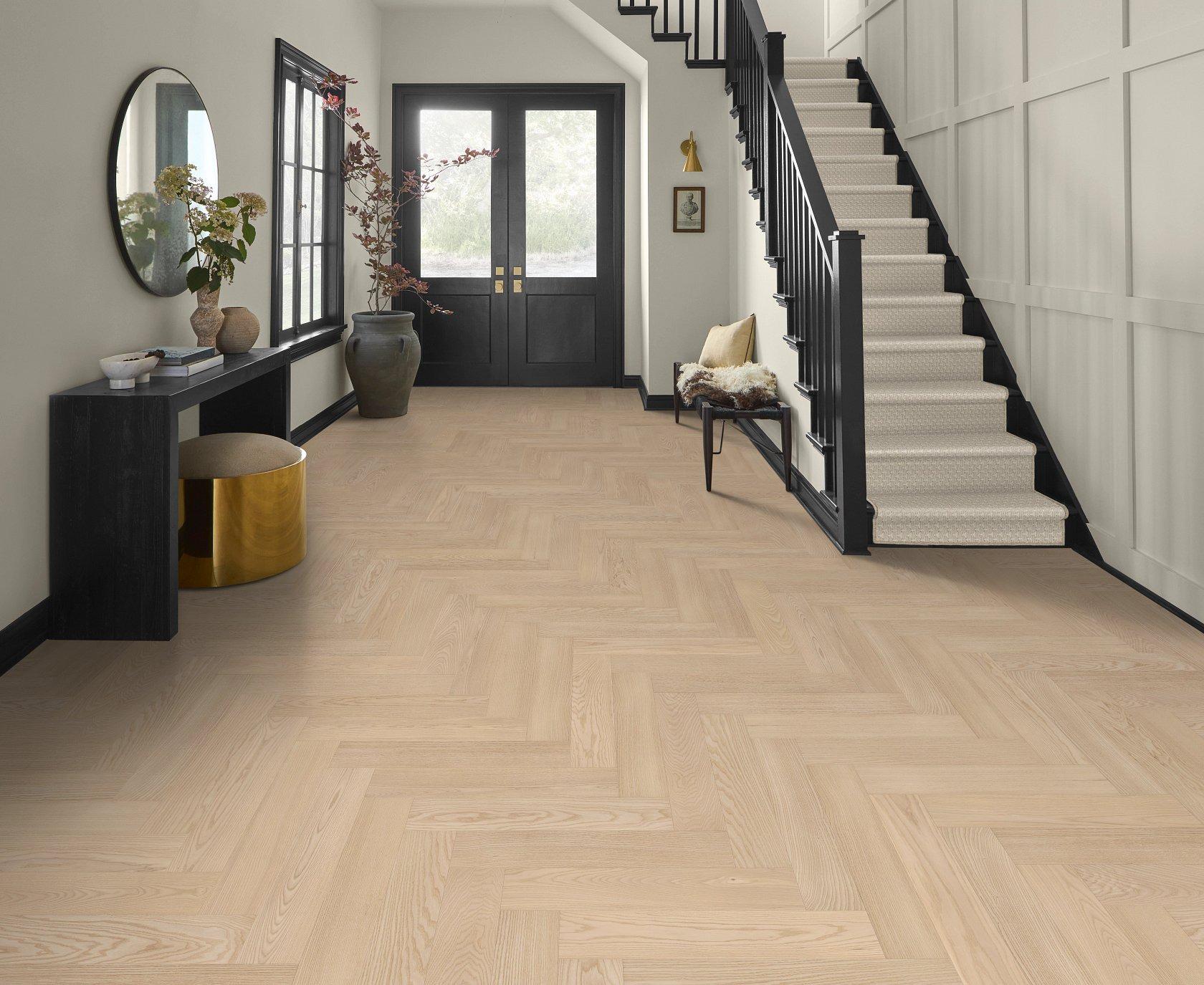
I’m seeing less of what people call millennial gray. That doesn’t mean gray is gone. Some rooms still look great in gray. Dark floors have their place too. What I’m seeing more of right now are blonde tones, lighter oaks, and warmer wood looks. Especially when somebody is renovating most of the first floor, those lighter colors come up more often. But I’m not going to tell you to buy a blonde floor because that’s what other people are buying. If you love gray, use gray. I care more about whether you'll still like your floor years from now.
A Few Things I’d Think About Before Choosing LVP
Start with your house. Not the sample. Who lives there? Do you have kids? Dogs? How big are the dogs? Where is the flooring going? What happens in that room every day? Then look at the product. What kind of wear layer does it have? What kind of surface protection? What will the warranty cover? Does how your family uses the floor change what you should be looking at? Look at several planks if you can. See the variation before you decide. And don’t forget about the installation. What flooring must be removed first? What’s underneath it? Is there preparation involved? Who is doing the work? Then I’d ask one last thing. Do you love it? I mean that. You’re spending a lot of money, and you’re also spending your time getting ready for an installation. If this is a floor you’re going to live with for years, I don’t want your reaction to be, “Well, this will do.”
Choosing The Right Floor for Your Home
If you’re considering LVP for your home in the Dayton Area, {location_name}® brings flooring samples to you so you can see them in the rooms where they’ll be installed. That gives us a chance to look at your house and talk. Maybe you have three big dogs. Maybe this is the kids’ basement. Maybe you care more about getting the color exactly right than anything else. Or maybe you walked into the conversation thinking you wanted LVP and, after looking at everything, carpet or another flooring option makes more sense. That’s okay. The point isn’t to put LVP in every house. It’s to help you choose a floor you understand and feel good about putting in your home.
If you’d like help sorting through the options, call (937) 719-8983 to connect with the experienced local specialists at Floor Coverings International® or schedule your free in-home consultation online.